
If your Cummins push tube timing readings won’t repeat, one cam follower housing refuses to come into specification, or an injector push rod keeps bending, the problem may not be your timing settings at all.
On Cummins N14, 855, KTA and similar engines, injector push rod travel is a critical part of the timing process. When the push rod, follower, or timing setup isn’t right, you’ll chase inaccurate readings and waste time adjusting components that aren’t actually causing the problem.
Before assuming your cam timing is incorrect, start by inspecting the mechanical components involved in the timing procedure.
For complete push tube timing instructions, read our Cummins Push Tube Timing: Step-by-Step Guide for N14, 855, KTA & More.
Start With the Injector Push Rod
When timing readings become inconsistent, the injector push rod is one of the first components that should be inspected.
Check for a Bent Push Rod
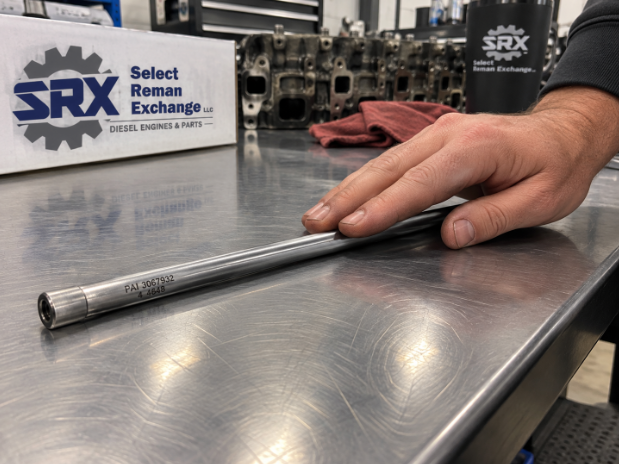
Roll the push rod across a clean, flat surface and watch carefully for any wobble.
Even a slightly bent push rod can create inconsistent timing measurements because the indicator is no longer following perfectly straight movement.
Inspect Push Rod Ends
After checking straightness, inspect both ends of the push rod.
Look for:
- Uneven wear
- Scratches or scoring
- Damaged contact surfaces
- Loose or worn sockets
- Abnormal wear patterns
Installing a new push rod against a worn adjusting screw or follower socket can quickly damage the replacement part.
Verify You’re Using the Correct Push Rod
Not all Cummins push rods are the same.
Depending on engine model and configuration, injector and valve push rods may differ in length and design. If the engine has been rebuilt or assembled from multiple sources, confirm the correct part number and dimensions before troubleshooting further.
Make Sure the Timing Tool Is Aligned Properly
A perfectly good push rod can still produce incorrect timing measurements if the timing fixture is not aligned correctly.
The injector push rod should sit straight beneath the timing tool plunger, with no side loading or interference from surrounding components.
Before taking readings:
- Verify indicator alignment
- Confirm the fixture is secure
- Ensure the push rod moves freely
- Check that both indicators are properly zeroed
Small setup issues often create large timing errors.
If Timing Readings Won’t Repeat
Before changing follower housing gaskets, verify the basics.
Work through this checklist:
- Confirm the push rod is straight
- Verify timing tool alignment
- Make sure indicators operate smoothly
- Ensure the piston indicator is centered
- Follow the proper crankshaft rotation procedure
- Remove gear train lash before rechecking
- Verify follower housing torque
- Inspect follower rollers and sockets
- Confirm crankshaft and camshaft timing marks
- Verify the proper timing specifications for the engine CPL
A bad measurement should never be corrected with gasket thickness until the source of the error has been identified.
Inspect the Cam Follower
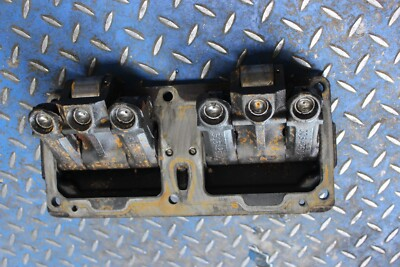
If the push rod checks good but your readings remain erratic, inspect the cam follower assembly.
Look for:
- Roller wear
- Flat spots
- Rough bearing operation
- Excessive movement
- Socket wear
Remember that your timing measurement ultimately starts at the camshaft lobe. Any wear between the cam lobe and timing indicator can affect the reading.
Why Does an Injector Push Rod Keep Bending?
A push rod that bends once deserves investigation.
A push rod that bends repeatedly is a symptom of another mechanical issue.
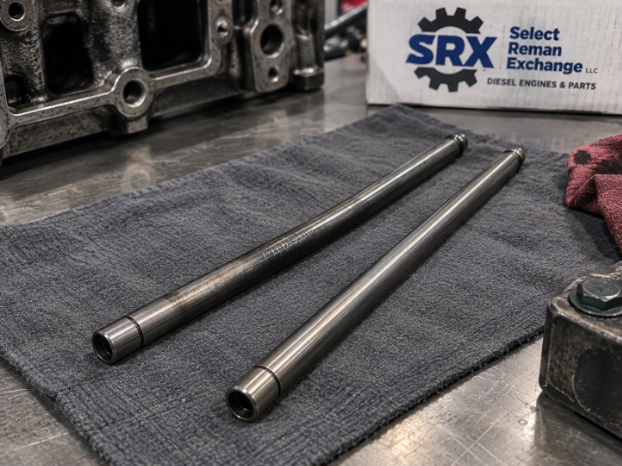
If an injector push rod continues to bend, inspect:
- Injector operation
- Rocker adjustment
- Adjusting screw condition
- Push rod alignment
- Follower socket wear
- Follower roller condition
- Camshaft lobe condition
- Proper overhead adjustment procedures
Simply replacing the push rod without identifying the root cause often results in another failure.
Don’t Chase a Bad Reading With Gaskets
One of the most common mistakes during push tube timing is using additional gasket thickness to compensate for a bad measurement.
Follower housing gaskets should be used to make legitimate timing corrections, not to mask:
- Bent push rods
- Worn followers
- Incorrect timing tool setup
- Camshaft timing problems
- Assembly issues
If a timing value doesn’t make sense, determine why before making adjustments.
Push Rod Troubleshooting and Push Tube Timing Go Hand in Hand
Consistent Cummins push tube timing depends on accurate measurements and healthy components.
Before adjusting timing, verify:
- Straight injector push rods
- Proper timing tool setup
- Good cam followers
- Correct gear timing
- Proper engine specifications
Once those items are confirmed, you can trust the measurement and make valid timing corrections.
For the complete timing procedure, including TDC verification, piston travel measurements, push rod indicator readings and follower housing adjustments, read our:
Cummins Push Tube Timing: Step-by-Step Guide for N14, 855, KTA & More
Need Help With a Cummins Engine?
At Select Reman Exchange, we work with Cummins diesel engines and engine components every day. If you’re troubleshooting injection timing, planning a rebuild, or need help identifying the correct parts for your application, our team is here to help.
Select Reman Exchange
8340 Silver Lake Rd.
Linden, MI 48451
574-213-5555
sales@srxengines.com
Always verify specifications and adjustment procedures using the engine serial number, CPL, and appropriate Cummins service information for the engine being serviced.
Leave a Reply